
Which Zinc Is Best for Hair Growth? Forms, Dosing and the Copper Catch
Zinc helps hair only if you are low. Here is which forms absorb best, how much to take, and why too much backfires.
Hair loss causes, treatments that actually work, red light therapy and what to skip.
Zinc helps hair only if you are low. Here is which forms absorb best, how much to take, and why too much backfires.
An honest look at Lipogaine for Women: ingredients, the original vs. Sensitive formula, results timeline, pros, cons and safety.
Low-dose oral minoxidil is popular for hair loss. Here are its real side effects, how common they are, and who should avoid it.
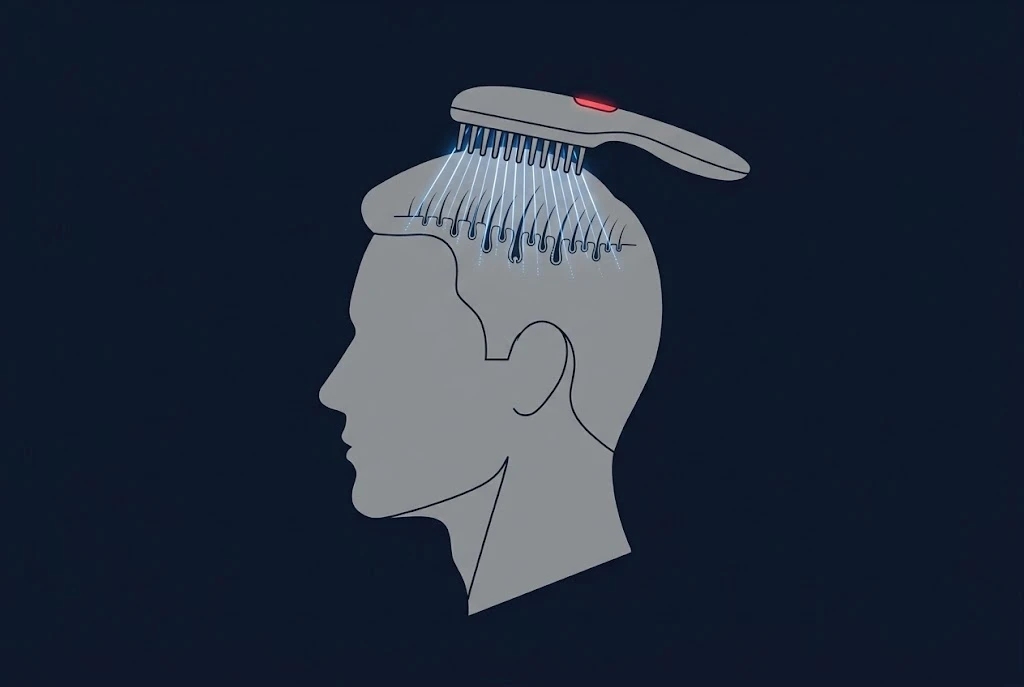
Teeth on the scalp, slow four-second steps, three times a week: how to use a laser comb so it actually has a chance to work, plus what to expect month by month.
If minoxidil makes your scalp itch or flake, propylene glycol is often to blame. PG-free options: foam, sensitive formulas, compounded and oral.

Collagen has decent evidence for skin and little for hair. Here is who might benefit, what to check first and how to use it if you try it.
Nutrafol runs about $1,000 a year. Cheaper alternatives, from minoxidil to targeted nutrients, and when each one makes sense.
Nutrafol is a supplement and Lipogaine is minoxidil. How they compare on evidence, cost and results, and who should pick which.
Low vitamin D shows up again and again in people with hair loss, but that does not mean supplements will regrow hair. What the research actually shows and who should test.
Acne pills, blood thinners, antidepressants, hormones and weight-loss drugs can all trigger shedding. The common culprits, why it happens, and why you should not just stop taking them.